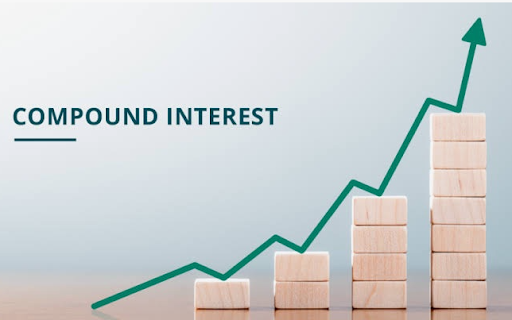
Compound interest is a powerful concept that can significantly impact your finances over time. Whether you’re saving for the future or managing debt like a personal loan of 60k, understanding the compound interest formula can help you make informed financial decisions. In this article, we’ll break down the compound interest formula, explore its applications, and provide simple examples to clarify its practical use.
What Is Compound Interest?
Compound interest is the interest calculated on the initial principal amount and the accumulated interest from previous periods. Unlike simple interest, where you earn or pay interest only on the principal, compound interest allows your money (or debt) to grow exponentially over time because interest keeps accruing.
The Compound Interest Formula
A=P(1+r/n)nt
Where:
- A is the future value of the investment/loan, including interest.
- P is the principal amount (the initial sum of money).
- r is the annual interest rate (in decimal form).
- n is the number of times interest is compounded per year.
- t is the time the money is invested or borrowed (in years).
Each of these variables plays a role in determining the impact of compound interest over time. Understanding how each one works can help you calculate and predict your future financial outcomes.
Why Is Compound Interest Important?
The importance of compound interest lies in its ability to generate exponential growth. For example, if you’re saving for retirement or other long-term goals, compound interest can help your investments grow steadily without requiring constant additional contributions. Similarly, when debt like a personal loan of 60k accrues compound interest, it’s vital to understand how quickly what you owe can rise.
Applications of the Compound Interest Formula
The compound interest formula applies to both savings and loans. Below are some of the most common scenarios where this formula comes in handy:
Savings and Investments
When you save money in a bank account, invest in stocks, or contribute to retirement funds, compound interest can work in your favor. Even small amounts saved early can grow substantially over time.
Loans and Credit Cards
For debts such as personal loans or credit card balances, compound interest works against you. The longer you take to pay off your debt, the more interest will accumulate.
Personal Loan of 60k Example
Imagine you took out a personal loan of ₹60,000 at a compound interest rate of 5% annually for 5 years. The bank compounds interest monthly, meaning n = 12. Using the compound interest formula, you can calculate how much you’ll owe at the end of 5 years.
Example: Calculating Compound Interest
Let’s break down the compound interest formula using simple examples.
Example 1: Growing Savings
Suppose you invest ₹10,000 in a savings account that offers a 6% annual interest rate compounded yearly for 3 years. Here’s how you would calculate it:
A = P(1 + r/n)^(nt)
A = ₹10,000(1 + 0.06/1)^(1 × 3)
A = ₹10,000(1.06)^3
A = ₹10,000 × 1.191
A = ₹11,910
Your savings would grow to ₹11,910 in 3 years.
Example 2: Accrued Debt on a Personal Loan of 60k
Let’s say you took a personal loan of ₹60,000, with a 5% annual interest rate, compounded monthly for 2 years. Here’s the calculation:
A = P(1 + r/n)^(nt)
A = ₹60,000(1 + 0.05/12)^(12 × 2)
A = ₹60,000(1 + 0.004167)^(24)
A = ₹60,000(1.004167)^24
A = ₹60,000 × 1.10494
A = ₹66,296.40
After 2 years, you would owe ₹66,296.40.
Factors That Influence Compound Interest
Several factors directly impact how much your money grows or your debt accumulates due to compound interest:
1. Frequency of Compounding
The more frequently interest is compounded, the faster the growth. For example, monthly compounding will result in more interest than annual compounding.
2. Time
The longer your money is in an investment (or the longer you wait to pay off debt), the greater the compound interest effect.
3. Interest Rate
Higher interest rates result in faster accumulation of compound interest.
Benefits of Understanding the Compound Interest Formula
Smart Savings Decisions
By understanding compound interest, you can maximize your savings. Start early, and the magic of compounding will generate wealth over time.
Debt Management
When borrowing money, like taking out a personal loan of 60k, you can assess how costly the loan may become over time due to compound interest. You can make informed decisions about repayment strategies.
Common Mistakes to Avoid
Ignoring Compounding Frequency
Many people overlook how frequently interest is compounded. Monthly compounding can add significantly to your total balance compared to yearly compounding.
Not Paying Off High-Interest Debt
If you have loans or credit card debt with high interest rates, it’s crucial to pay them off quickly. Compound interest can cause your debt to spiral out of control over time.
Using Online Compound Interest Calculators
While it’s useful to know the formula, online compound interest calculators can simplify complex calculations for you. Input the principal amount, interest rate, compounding frequency, and time period to instantly get the results.
Conclusion
Understanding the compound interest formula is a key skill for anyone managing finances. Whether you’re saving for the future or evaluating the cost of debt like a personal loan of 60k, the concept of compounding plays a crucial role in your growth or repayment strategy.
By utilizing the formula and simple examples, you can visualize how your money can grow or how quickly debt can accumulate over time. With a better understanding of compound interest, you’ll be equipped to make smarter financial choices, avoid costly mistakes, and pave the way for a brighter financial future.
Remember, time and consistency are your allies when it comes to compound interest. Start saving early, avoid high-interest debt, and watch the power of compounding work its magic!