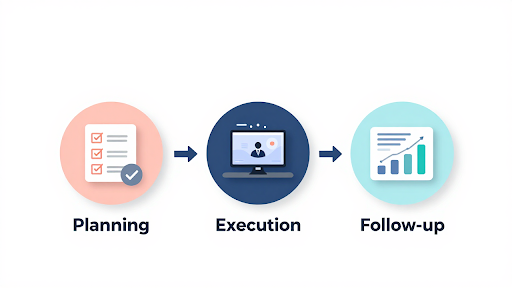
Every successful event goes through several stages before it is completed. From the first idea to the final feedback report, there are many steps involved in organizing a smooth and engaging event. These stages together form what is known as the event lifecycle.
Understanding the event lifecycle helps organizers plan better. They can manage tasks efficiently. Also, they can deliver a great experience for attendees. Following a structured event management lifecycle ensures that nothing is missed.
In this article, we will explore the complete journey of an event. Starts from planning and goes up to post-event follow-up.
What Is the Event Lifecycle?
The event lifecycle refers to the complete journey of an event. It includes every activity involved in creating, organizing, running, and evaluating the event. The event management lifecycle usually includes three main phases:
- Event planning and preparation.
- Event execution and management.
- Post-event follow-up and analysis.
Each stage plays an important role. Each stage ensures the event runs smoothly and achieves its goals. By understanding these stages, organizers can improve the event planning process and deliver better event experiences.
Stage 1: Event Planning and Preparation
The first and most important stage of the event lifecycle is planning. This is where the foundation of the event is built.
A well-structured event planning process helps organizers define the purpose, audience, and goals of the event. Without proper planning, even small issues can create big problems during execution.
During this stage, organizers usually focus on several important tasks.
Defining Event Goals
The first step in the event management lifecycle is identifying the purpose of the event. Organizers need to ask questions such as:
- What is the objective of the event?
- Who is the target audience?
- What kind of experience should attendees have?
For example, a conference may aim to share industry knowledge, while a product launch may focus on brand promotion. Clear goals help guide the rest of the event planning process.
Budget Planning
Budgeting is another important part of the event lifecycle. Organizers must allocate funds for different aspects of the event such as venue, marketing, technology, speakers, and catering.
A well-planned budget helps avoid overspending and ensures that resources are used effectively.
Many organizers also invest in event technology such as event registration platforms and an event app to streamline operations.
Choosing the Venue and Date
Selecting the right venue is essential for the success of the event.
The venue should be accessible, comfortable, and suitable for the type of event being organized. Organizers also need to consider factors such as capacity, technical support, and transportation access.
The event date should be chosen carefully to avoid conflicts with other major events or holidays. These decisions are key elements of the event planning process.
Setting Up Event Registration
Once the basic details are finalized, organizers begin promoting the event and collecting registrations.
This is where event registration systems play an important role. An online event registration platform allows attendees to sign up easily, select ticket types, and receive confirmation instantly.
The system also helps organizers track registration numbers and manage attendee information. Using digital tools makes this stage of the event lifecycle more efficient and organized.
Stage 2: Event Promotion and Engagement
After planning and registration setup, the next step in the event management lifecycle is promotion.
Promotion helps create awareness and attract attendees to the event. Organizers often use multiple marketing channels such as:
- Email campaigns.
- Social media marketing.
- Event websites.
- Partner promotions.
During this stage, an event app can also help build excitement among registered attendees. Many events provide attendees with access to an event app where they can view schedules, speaker profiles, and event updates. This improves engagement even before the event begins.
Stage 3: Event Execution
The execution stage is when the event finally takes place. All the planning and preparation now come together in real time.
This phase of the event lifecycle requires strong coordination and teamwork. Several important processes take place during event execution.
Event Check-In and Entry Management
The event day usually begins with event check-in. Attendees arrive at the venue and verify their registration. Traditionally, this process involved manual lists and long waiting lines.
However, modern event registration systems now make event check-in much faster. Attendees can show their QR codes or digital tickets, which are scanned quickly by event staff. This allows organizers to manage entry efficiently and reduce waiting time. A smooth event check-in process creates a positive first impression for attendees.
Managing Sessions and Activities
During the event, organizers must ensure that all sessions, presentations, and activities run according to schedule. An event app can be very helpful in this stage of the event management lifecycle.
Attendees can use the app to:
- View the event agenda.
- Receive session reminders.
- Get venue directions.
- Participate in polls or Q&A sessions.
This digital support improves communication between organizers and attendees. It also enhances the overall event experience.
Networking and Engagement
One of the key reasons people attend events is networking. During this stage of the event lifecycle, organizers focus on creating opportunities for interaction.
This may include networking sessions, panel discussions, workshops, or exhibition booths. An event app can support networking by helping attendees connect with each other, exchange contact details, and schedule meetings. Engagement activities help attendees get more value from the event.
Stage 4: Monitoring and Real-Time Management
While the event is running, organizers must monitor operations closely. This stage of the event management lifecycle involves tracking attendee activity and resolving issues quickly.
Modern event registration platforms provide real-time insights, such as:
- Number of attendees checked in.
- Session attendance levels.
- Crowd movement.
These insights help organizers make quick decisions if any adjustments are needed. For example, if a session room becomes overcrowded, organizers can redirect attendees to another space. Real-time monitoring ensures smooth event operations.
Stage 5: Post-Event Follow-Up
The event lifecycle does not end when the event finishes. The final stage is post-event follow-up and evaluation. This phase is important for measuring success and improving future events.
Collecting Feedback
After the event, organizers often send feedback surveys to attendees. These surveys help understand what attendees liked and what could be improved. An event app can make this process easier by allowing attendees to submit feedback directly through the app. Feedback helps organizers improve their event planning process for future events.
Analyzing Event Data
Another important part of the event management lifecycle is analyzing event data.
Organizers review information such as:
- Total event registration numbers.
- Actual attendance from event check-in records.
- Session participation.
- Engagement levels.
This data helps measure the overall success of the event. It also provides valuable insights for future planning.
Conclusion
The event lifecycle includes every stage of an event. By understanding the event management lifecycle, organizers can create well-structured and successful events.
A strong event planning process, efficient event registration, smooth event check-in, and engaging tools like an event app all contribute to a better event experience.
Each stage of the lifecycle plays an important role in ensuring that the event runs smoothly and achieves its objectives.
When organizers follow a clear event lifecycle strategy, they can deliver memorable events while continuously improving their future event planning efforts.