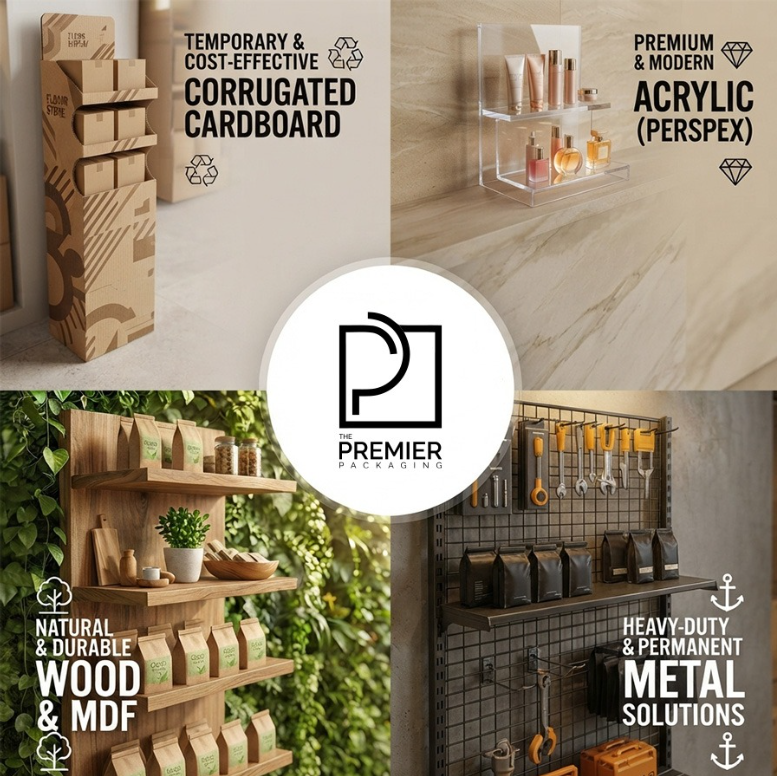
A good retail display does a lot more than just hold your products upright. It’s often the thing that makes a shopper stop, look twice, and actually pick something up. So it’s worth putting as much thought into the material you build it from as the shape or design itself.
You’ve got plenty of options: cardboard, acrylic, wire, PETG, styrene, wood, metal, and a handful of others. None of them is “the best” across the board; each is good at different jobs. Some are meant to be swapped out every season, others are built to sit on a shelf for years. Some let customers see straight through to the product, and others give you a big canvas for branding instead.
Really, the right pick comes down to four things: what you’re selling, where the display will live, how long it needs to last, and what you’re willing to spend.
What Exactly Counts as a Display Material?
This just means whatever the stand, shelf, rack, countertop unit, or floor display is physically built out of.
That choice ends up touching almost everything else about the display:
- How visible the product is
- How long does the display hold up
- What it looks like
- What it costs to make
- How much does it weigh to ship
- How easy it is to customize
- How much upkeep does it need
- Whether it can be reused
- Its environmental footprint
A small cosmetics display sitting on a countertop has completely different needs than a floor-standing unit for packaged food. Once you understand what each material is actually good at, the decision gets a lot easier.
- Cardboard Flexible, Cheap, and Easy to Print On
Cardboard remains the go-to for a reason. It’s light, easy to cut into just about any shape, and takes print beautifully, logos, promotional copy, full-color graphics, all of it goes right on the surface.
That’s exactly why brands that change their campaigns often lean on cardboard. Think Christmas, Valentine’s Day, Halloween, or a fresh product launch. Instead of building something permanent, you throw together a lightweight display and swap it out once the promotion’s over.
It also ships cheaply, since it barely weighs anything, and a well-built paper display box can keep smaller items organized while your branding stays front and center.
Cardboard makes the most sense for:
- Seasonal promotions
- New product launches
- Supermarket displays
- Countertop merchandising
- Short campaigns
- Lightweight products
Where it falls short is durability. Heavy handling, moisture, or months of wear will wear it down fast, so it’s not the right call for anything long-term.
- Acrylic When You Want Shoppers to See the Product Clearly
If product visibility is the priority, acrylic is usually the answer. It’s transparent, so customers can look at a product from every angle without anything getting in the way great for cosmetics, electronics, collectibles, and accessories where looks matter.
There’s also a visual bonus: acrylic gives a display a clean, modern feel, and can even make a cramped retail corner feel a bit more open.
It holds its shape well too, and can be molded into shelves, risers, trays, holders, or full countertop units. You can get it in different colors and finishes, which gives you room to match it to your brand.
Good reasons to choose acrylic:
- You need shoppers to really see the product
- You want a sleek, contemporary look
- You need something sturdy
- You want flexibility in shape and size
- The display is staying indoors long-term
The catch is, acrylic costs more than cardboard and scratches, so it needs a bit more care to stay looking sharp.
- PETG Tougher Than Acrylic, Still Clear
PETG is a clear plastic that trades a bit of acrylic’s polish for extra strength and flexibility. You still get that see-through look, but the material can take rougher handling without cracking.
It bends, shapes, and prints well, too, making it a solid pick for larger fixtures, protective cases, and product holders that need to withstand daily use.
Consider PETG when you need:
- A sturdier build than basic acrylic
- Clear visibility
- Some flexibility in the material itself
- Resistance to impact
- A professional finish
Basically, if acrylic feels a little too delicate for how your display will actually get used, PETG is the upgrade.
- Wire Open, Reusable, and Easy to Move
Wire displays look nothing like solid plastic or cardboard ones and that’s the point. The open structure lets customers see products from every side, allows air to move freely around them, and leaves far less surface area for dust to collect.
Because wire fixtures are reusable, they’re a favorite in stores that often rearrange their floor layouts. They’re light enough to move around with little effort and can be built with hooks, baskets, and multiple shelf levels.
You’ll typically spot wire displays holding:
- Accessories
- Packaged snacks
- Small household items
- Toys
- Greeting cards
- Clothing accessories
- Promotional merchandise
If your store regularly changes product placement, wire is one of the easiest materials to work with.
- Styrene A Budget-Friendly Middle Ground
Styrene is another plastic worth knowing about, lightweight, rigid, and generally cheaper than acrylic. It shapes easily and strikes a reasonable balance between looking decent and not blowing the budget.
A lot of businesses turn to styrene specifically when acrylic is out of price range. It works well for signage, panels, and smaller display components, and its light weight helps keep shipping costs down when you’re producing in bulk.
Styrene vs. acrylic, in short: acrylic wins on clarity and durability; styrene wins on cost. The right choice depends on how the display will actually be used not just which one is cheaper on paper.
- Wood for a Premium, Built-to-Last Feel
Wood brings warmth to a display in a way plastic and cardboard simply can’t. It’s a natural fit for furniture, home décor, luxury goods, handmade products, and specialty retail settings.
You can stain it, paint it, engrave it, or pair it with other materials, and it tends to make a display feel more permanent, which matters if your brand wants to project stability rather than “here today, gone next month.”
The trade-off is weight. Wood costs more to build and more to ship than cardboard or lightweight plastic.
- Metal Built for Heavy Use and Long Life
When strength and longevity matter most, metal is usually the answer. Steel and aluminum shelving, racks, and floor displays can take heavy products and constant customer handling without buckling.
That makes metal a natural choice for fixtures meant to stay in place for years, not months. It can also be powder-coated or finished in different ways to fit the store’s look.
The downsides are the obvious ones: it’s heavy, costs more to manufacture, and shipping is more expensive than for a cardboard display.
So, How Do You Actually Decide?
Start with your own requirements, not what looked good in another store you walked into last week.
Think about product weight. Lightweight packaged goods are fine on cardboard. Heavier items need something sturdier, like metal.
Think about how long it needs to last. A few weeks? Cardboard’s fine. Multiple years? You’re probably looking at metal, wood, acrylic, or PETG.
Think about where it’s going. A busy supermarket puts a display through more wear than a quiet boutique. Humidity, sunlight, cleaning routines, and available floor space all play a role, too.
Think about visibility. If the packaging itself needs to be seen, go with transparent acrylic or PETG. If branding and messaging matter more, cardboard gives you more room to work with.
Think about shipping. A display that looks amazing in a showroom can get expensive fast once you factor in shipping it to dozens of stores. Weight and size matter more than people expect.
What Your Display Material Says About Your Brand
Your display is part of the brand experience, whether you plan it that way or not.
Picture a product sitting on a bare shelf versus that same product inside a well-designed, branded display with clear messaging and strong visuals. The second version just gives shoppers more to connect with.
Cardboard gives you space to print and brand freely. Acrylic reads as clean and premium. Wood feels natural or handcrafted. Metal leans industrial and professional. A luxury skincare line and a children’s toy brand shouldn’t be reaching for the same material, and that’s exactly the point.
Don’t Ignore Sustainability
More businesses are starting to think about what happens to a display once the campaign wraps up, and that’s a good instinct to have.
Cardboard tends to be the easiest to recycle, which makes it a solid pick for anything short-term. Wire, metal, wood, and certain plastics can cut down on waste too, as long as they’re actually designed to be reused across multiple campaigns.
Rather than chasing a material just because it’s labeled “eco-friendly,” look at the whole lifecycle of how it’s made, shipped, used, and eventually disposed of.
Matching Material to Product Type
Cosmetics: Clear acrylic, PETG, or well-printed displays tend to work best, keeping products organized while still looking premium.
Food: Organization, visibility, and hygiene come first. Cardboard suits short promotions; wire or metal make more sense for reusable fixtures.
Electronics: Needs something rigid and protective. Acrylic and PETG offer both visibility and structure.
Clothing accessories: Wire works well for anything that hangs; cardboard and acrylic suit smaller countertop items.
Small promotional items: Cardboard again, mainly because it delivers strong branding without adding bulk or weight.
Mistakes Worth Avoiding
The biggest one is chasing the lowest price without thinking ahead. A cheap display that needs replacing every few months can end up costing more than a sturdier option would have.
Shipping is another blind spot. A heavy display becomes expensive fast once you’re sending hundreds of units to stores. And don’t overlook product weight either; a display can look great and still fail to actually support what’s sitting on it.
Finally, always factor in where the display is going. What works in a calm boutique might not survive a busy supermarket floor.
You Don’t Have to Pick Just One Material
Plenty of the best displays combine two or three materials to get the benefits of each. A cardboard structure with acrylic product holders, or a metal frame paired with wooden shelves, mixed-material builds can create a stronger look while letting each part do what it does best. The main thing is making sure everything works together, both structurally and visually.
Quick Checklist Before You Order
- What products will it hold, and how much do they weigh?
- How long will the display need to last?
- Will customers be handling the products directly?
- Does it need to be moved around the store?
- How much floor space do you actually have?
- Does the material fit your branding?
- What will be the shipping cost?
- Can it be reused for future campaigns?
- What happens to it once the campaign ends?
Working through these questions up front saves you from choosing a material based purely on looks or sticker price.
Bottom Line
There’s no single best material for retail displays only the best one for your specific situation.
Cardboard is your flexible, budget-friendly option. Acrylic and PETG win when product visibility matters most. Wire is ideal for open, reusable merchandising. Styrene strikes a balance between cost and performance. Wood adds warmth and a premium feel, while metal delivers the strength needed for demanding retail settings.
The right answer comes from aligning your product, store, campaign length, budget, and brand, and choosing the material that fits all five. If you’re planning custom retail packaging or displays, “The Premier Packaging” can help you explore material and design options suited to your product presentation.